House moves rarely run in one neat line from packing boxes to unlocking the next front door. Dates can shift, chains can pause, keys can be delayed, and sometimes the new home is ready in stages rather than all at once.
Temporary storage gives you breathing space without forcing rushed decisions. Used well, it can turn a tight move into a more manageable process, especially when there is a gap between homes, less space than expected or more sorting still to do.
Why storage helps when moving dates do not line up
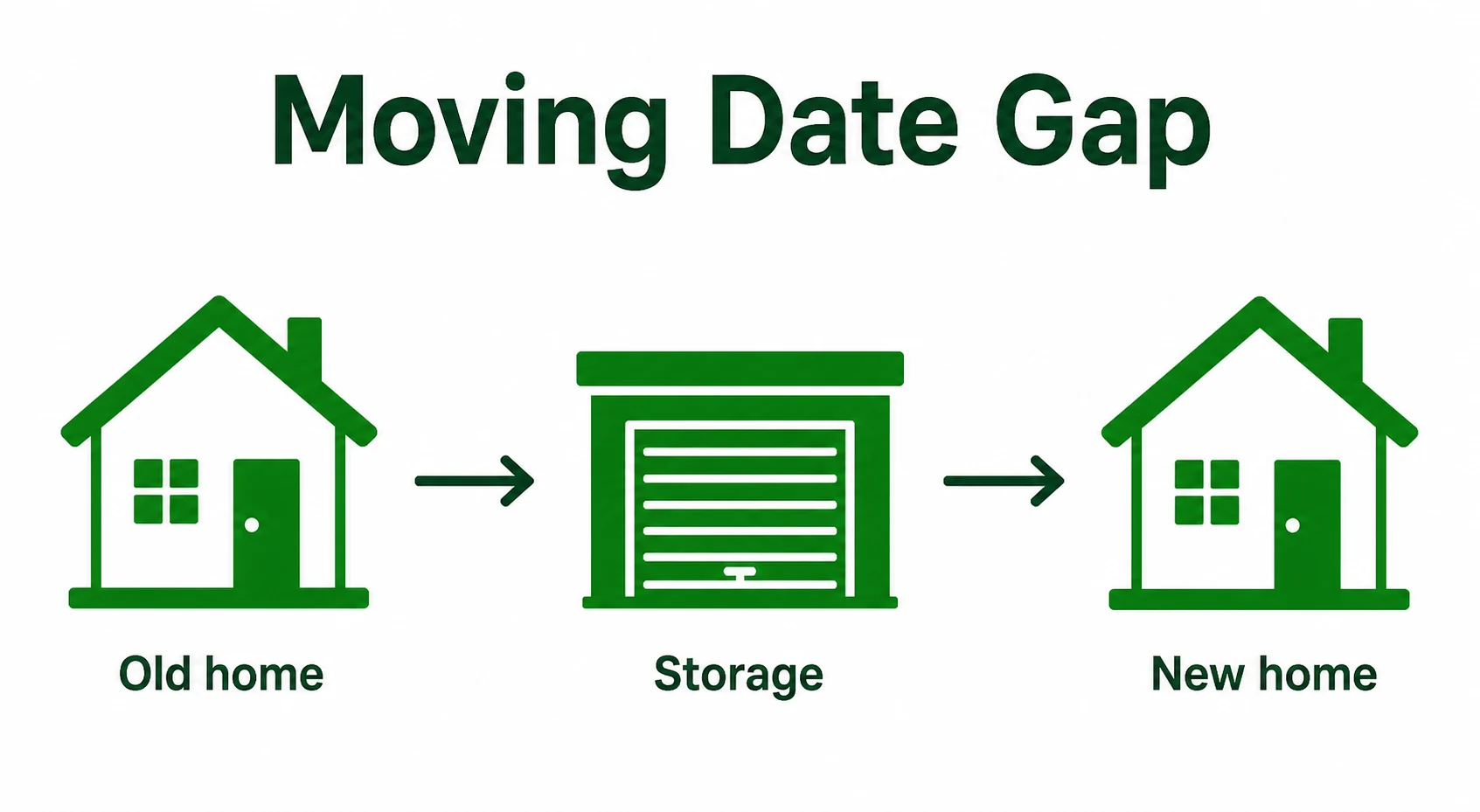
One of the most common reasons people look for temporary storage during a house move is a simple timing gap. You may need to leave one property before the next one is fully available. You may have access to the new home, but not enough time to move everything in, unpack properly and keep daily life running at the same time.
Storage acts as a buffer. Instead of trying to squeeze every part of the move into one busy day, your belongings can be moved securely out of the old property and brought back when the next step is ready. That can be especially useful if completion timings change, rental dates overlap awkwardly or renovation work is still being finished.
The main benefit is flexibility. You are not forced to make the whole move depend on one exact handover time. You can clear the property you are leaving, protect your belongings and then arrange delivery into the new home once access is practical. That makes the process calmer for you and easier to organise for everyone involved.
It can also reduce pressure on family, friends and work commitments. Rather than taking extra time off or living surrounded by boxes while you wait for a room to become usable, you can keep only the essentials with you and store the rest until the home is ready to receive it.
Using storage to make downsizing decisions easier

Downsizing sounds straightforward until you are standing in front of years of furniture, books, kitchenware, tools, keepsakes and spare bedding. Even when you know the new home has less space, it is not always obvious what should stay, what should go and what might still be useful later.
Temporary storage can stop downsizing from becoming a rushed clear out. Instead of making every decision under deadline pressure, you can move priority items into the new home first and give yourself more time to think about the rest. That is often far more sensible than trying to decide the future of every chair, cabinet and box on moving day.
A practical approach is to separate belongings into clear groups before moving. Essentials go with you straight away. Items you are confident you want to keep, but do not need immediately, can go into storage. Things you are unsure about can be reviewed once you have lived in the new space for a while and understand what actually fits.
This is where storage becomes less about holding items and more about supporting better choices. You can see how each room works, measure available space properly and avoid overcrowding the new home from day one. If you later decide that some items are not needed, you can deal with them calmly rather than in the middle of a move.
How staged access can make storage useful
Not every move gives you full access to every room straight away. Flooring may be going down in one area, decorating might be unfinished, or large furniture may need to wait until other work is complete. In flats or shared buildings, lift access, parking windows and entry times can also affect how smoothly everything can be brought in.
Storage gives you a way to stage the move around real access, not ideal access. Large items can be held back until there is a clear route through the property. Boxes for rooms that are not yet ready can stay out of the way. Furniture that would block trades or make decorating harder can be delivered later.
This staged approach can make a big difference to how the first few days feel. Instead of every room becoming a holding area, the new home can be set up in a more orderly sequence. Beds, everyday kitchen items, clothes and work equipment can come first. Less urgent boxes and spare furniture can follow once the main spaces are settled.
If you are planning removals alongside storage, it helps to tell the removals team what needs to be delivered first and what can wait. The more clearly items are labelled, the easier it is to keep the move organised. Triple A Removals can also support wider house removals planning when storage is only one part of the move.
What to store and what to keep close
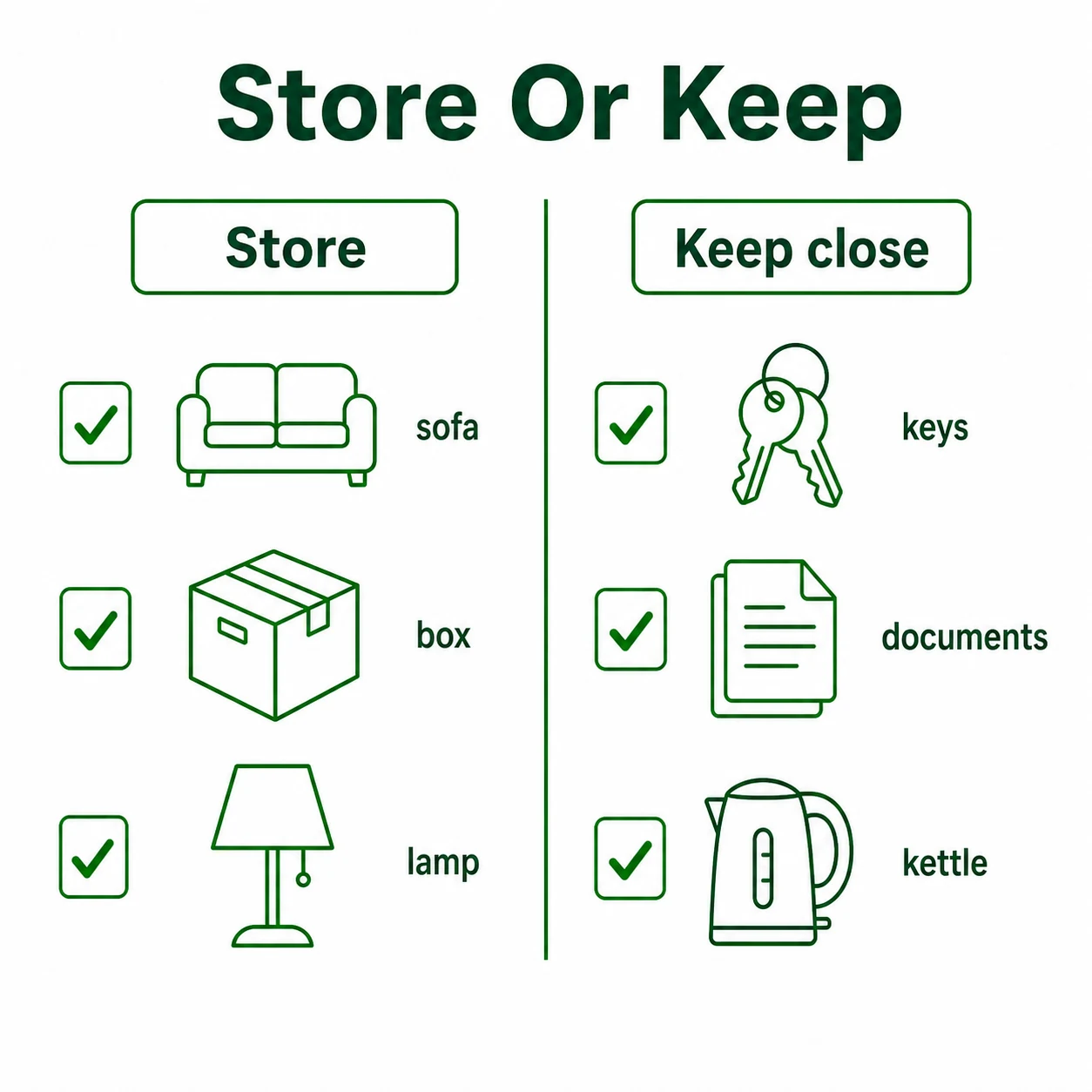
Storage works best when you think about access before the boxes leave your home. Some belongings are ideal for short term storage because you will not need them every day. Others should stay with you because they are personal, urgent or difficult to replace quickly.
Good storage candidates often include spare furniture, seasonal items, books, ornaments, occasional kitchenware, boxed paperwork, extra bedding, garden tools and items from lofts, garages or spare rooms. These are the things that take up space but do not usually need to be unpacked on the first evening.
You should usually keep everyday clothing, medication, chargers, important documents, basic toiletries, work equipment, school items, pet supplies and enough kitchen essentials for the first few days. If there are sentimental or high value items you prefer to keep personally, set those aside before the main packing begins.
For a more detailed look at suitable items, Triple A Removals has a useful guide on what you can put into storage during a house move. The key point is to avoid treating storage as a random overflow space. A little planning now can save a lot of searching later.
Planning storage as part of the whole move
The best time to think about storage is before packing begins. That does not mean every detail has to be fixed, but it does help to know whether some items are likely to go straight into storage rather than into the new home.
Start by walking through each room and marking items as moving in, storing or deciding later. Use plain labels that make sense to you, such as kitchen storage, spare room storage or deliver first. Keep a simple list if you are storing several groups of items, as it will help when you are ready to bring things back.
It is also worth thinking about packing quality. Items going into storage should be packed securely, with boxes closed properly and fragile contents protected. Furniture may need suitable covering, and loose parts should be kept together where possible. If packing feels like the part most likely to slow you down, a professional packing service for house moves can make the storage side much easier to manage.
Storage can also support your moving checklist. If there is a delay, a staged handover or a lot of sorting still to do, storage gives you another option besides rushing. Instead of treating the move as one fixed day, you can plan it as a sequence of sensible steps.
Keeping the move calm when plans change

Even well organised moves can change. A solicitor may need another document, a landlord may adjust access, a buyer may request an earlier date or work at the new property may take longer than planned. Temporary storage gives you room to adapt without starting from scratch.
The most helpful mindset is to use storage as a practical planning tool. It is not only for people with large homes or lots of furniture. It can help anyone who needs time, space or a little separation between moving out and moving in.
That separation can be valuable emotionally as well as practically. Moving is full of decisions, and too many decisions in one day can become draining. When non essential items are safely out of the way, you can focus on the immediate tasks, setting up beds, finding the kettle, checking utilities and making the new place usable.
Once the urgent part of the move is done, you can decide what comes back from storage and when. That is the real strength of moving house storage solutions. They let the move work around your actual circumstances, rather than forcing everything to happen at once.
- Temporary storage can bridge awkward gaps between moving out and moving in.
- It helps with downsizing by giving you time to make better decisions after the move.
- Staged delivery can keep the new home clearer while rooms, access or work are still being organised.
- Good labelling and a simple storage list make it easier to find and return items later.
- Storage works best when planned alongside packing and removals, rather than added at the last moment.
Frequently asked questions
Is temporary storage useful if I only need it for a short time?
Yes. Even a short gap between moving dates can be much easier to manage when your belongings have somewhere secure to go. It can also help if you want to unpack in stages rather than fill the new home with everything at once.
Should I pack differently for storage during a move?
Items going into storage should be packed securely, clearly labelled and protected where needed. Think about what you may need first when the items return, and avoid mixing urgent essentials with things you will not use for weeks.
Can storage help if I am moving to a smaller home?
Yes. It gives you time to see how the new space works before making final decisions about furniture and belongings. That can prevent overcrowding and reduce the pressure to make rushed choices on moving day.
How do I decide what goes into storage?
Keep daily essentials with you and use storage for items you do not need immediately, such as spare furniture, seasonal belongings, books, ornaments and boxed items from less used rooms. A simple room by room list will make the process easier.
Need space between moving steps?
Triple A Removals can help you plan storage around your move, whether dates have shifted, access is staged or you simply need more time to get settled.