Most people discard items without considering the type of waste they are generating. We see this every day when helping customers clear homes, garages, and offices. The problem is simple: when waste is not sorted properly, it often cannot be recycled, may not be collected, and can even cause environmental harm.
In this guide, we explain the types of waste, what counts as household waste, and how residential refuse collection works in the UK. We keep everything clear and practical so you can manage your waste with confidence.
What Is Household Waste?
Household waste is any waste produced inside a home.
This includes:
- Food scraps and leftovers
- Packaging like cardboard and plastic
- Old furniture and appliances
- Garden cuttings and unwanted items
In simple terms, if it comes from your home and you no longer need it, it is household waste.
Why Understanding Types of Waste Matters
We often find that waste problems start when everything is treated the same.
If waste is not sorted correctly:
- Recycling may be rejected
- Harmful items can cause damage
- Bins may not be collected
- Clutter builds up quickly
Understanding the different types of waste helps you avoid these issues and makes disposal much easier.
The Main Types of Waste (Easy Breakdown)
We categorise waste into simple categories so you can easily identify where to place each item.
1. General Waste (Non-Recyclable)
This is waste that cannot usually be reused or recycled.
Examples:
- Food-contaminated packaging
- Used tissues and paper towels
- Mixed materials
- Certain plastics
This type of waste usually goes to a landfill or an energy recovery facility.
2. Recyclable Waste
This includes materials that can be processed and reused.
Examples:
- Paper and cardboard
- Glass bottles and jars
- Metal tins and cans
- Clean plastic containers
We always recommend rinsing items before recycling. Dirty materials are often rejected.
3. Organic Waste (Biodegradable)
Organic waste breaks down naturally over time.
Examples:
- Food scraps and peelings
- Tea bags and coffee grounds
- Garden waste like leaves and grass
This type of waste can be composted or used to generate energy.
4. Bulky Waste
Bulky waste includes large items that do not fit into bins.
Examples:
- Sofas and mattresses
- Wardrobes and tables
- Fridges and washing machines
We often help customers remove these items through our rubbish clearance service, especially during house moves or renovations.
5. Hazardous Waste
Some waste requires special handling and should never go in standard bins.
Examples:
- Paints and chemicals
- Batteries
- Cleaning products
- Medicines
These items must be taken to proper facilities or handled by licensed professionals.
6. Electronic Waste (WEEE)
Electrical items fall under strict UK regulations.
Examples:
- Phones and laptops
- TVs and monitors
- Small kitchen appliances
- Large white goods
These must be recycled separately through approved collection points.
Biodegradable vs Non-Biodegradable Waste
This is one of the simplest ways to understand waste.
- Biodegradable waste breaks down naturally (food, paper, garden waste)
- Non-biodegradable waste does not break down easily (plastic, metal, glass)
When mixed, recycling becomes much harder. We always advise keeping them separate.
What Is Refuse Collection?
Refuse collection is the system used to collect waste from homes.
In the UK, most councils provide:
- General waste collection
- Recycling collection
- Food waste collection
- Garden waste collection (sometimes paid)
Each council has different rules, so correct sorting is essential.
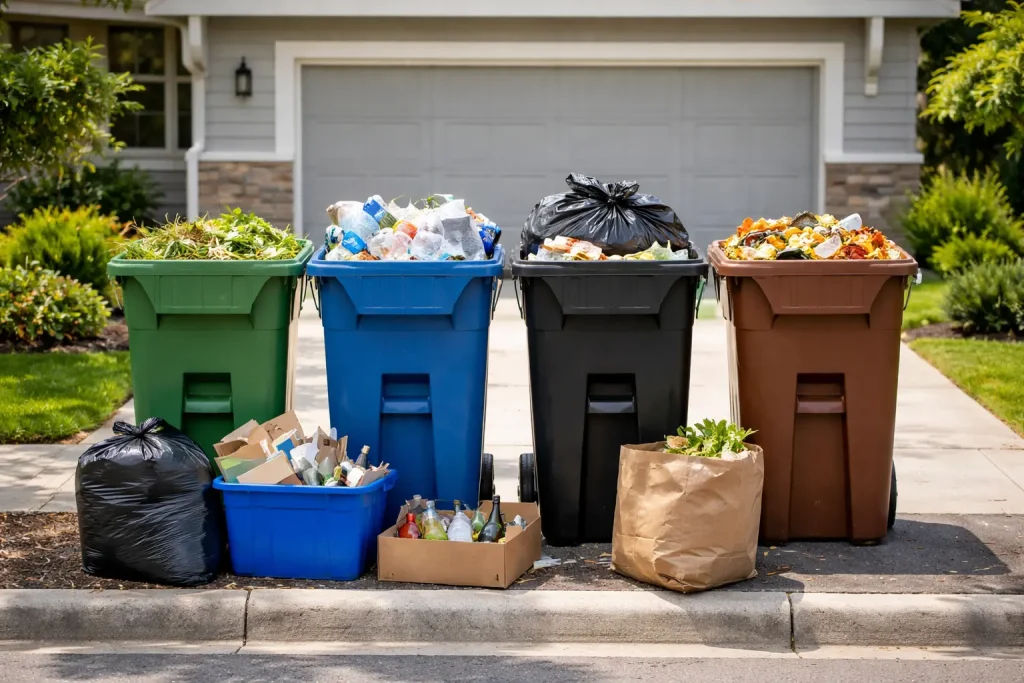
What Goes in Which Bin?
Here is a simple reference you can follow:
| Waste Type | Where It Goes |
| Food waste | Food caddy or compost |
| Paper & cardboard | Recycling bin |
| Plastic bottles | Recycling bin |
| Glass bottles | Recycling bin or bottle bank |
| Non-recyclable items | General waste |
| Clothes | Charity or textile bank |
| Batteries | Supermarket or recycling centre |
| Garden waste | Garden bin or compost |
| Bulky items | Council collection or clearance service |
| Electronics | WEEE collection or recycling centre |
| Paint & chemicals | Hazardous waste facility |
How Residential Refuse Collection Works (Step-by-Step)
We often get asked what happens after waste leaves your home. Here is the process:
- Collection
Waste is collected from your bins on scheduled days. - Sorting
Materials are separated into paper, plastic, glass, and metal. - Treatment
Organic waste is composted or used for energy. - Recycling
Reusable materials are processed into new products. - Disposal
Remaining waste goes to a landfill or energy recovery.
This process only works properly when waste is sorted correctly at home.
Common Mistakes to Avoid
We regularly see these issues during clearances:
- Putting the wrong items in recycling bins
- Not rinsing containers
- Throwing batteries in the general waste
- Bagging recyclables in plastic bags
- Leaving bulky waste outside (fly-tipping risk)
Avoiding these mistakes helps improve recycling rates and keeps your space cleaner.
When Council Collection Is Not Enough
There are times when standard bins are simply not enough.
We usually step in when customers are:
- Clearing a full property
- Moving house
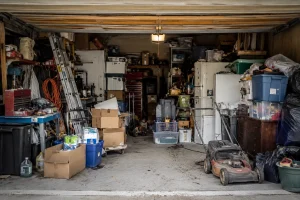
- Emptying a garage or loft
- Dealing with bulky waste
- Ending a tenancy
For example, our house clearance and flat clearance services are designed to handle large volumes of mixed waste quickly and responsibly.
Practical Ways to Reduce Household Waste
Managing waste is easier when you create less of it.
We suggest:
- Planning meals to reduce food waste
- Using reusable bags and containers
- Donating items instead of throwing them away
- Composting organic waste
- Repairing items where possible
Small changes make a big difference over time.
How We Can Help at Triple A Removals
At Triple A Removals, we handle all types of waste, from small household clearances to full property clean-outs. We understand that not everything fits neatly into a bin, and that is where we step in.
Whether you need help with a house move, clearing out unwanted items, or managing a build-up of rubbish, we take care of the sorting, lifting, and responsible disposal. We also offer house removals, office removals, packing services and secure storage to make the entire process simple.
If you need reliable help, get in touch with us today for a quick, no-obligation quote. We keep everything straightforward so you can clear your space without stress.